We exist to see a Jesus revival awakened in and through tech.
FaithTech is a practicing community. We believe there is a way of building technology that redemptively changes the world while transforming those who build it. We gather in city-based communities around the world to build technology together, rooted in a biblically based method, and bring this new method of building back into our workplaces.
In FaithTech Create, volunteer teams leverage technology to create redemptive solutions to kingdom focused challenges.
We believe in a new way of building technology. A different way. A redemptive way.
In FaithTech Create, we form small teams around ideas that emerge within a local city. These teams follow our 4D cycle methodology to create technology tools that help advance the gospel, help the local church, or serve the most poor and marginalized.
Featured


Why this AI Age Needs More Than Human Leadership
I’ve been overwhelmed by the amount of leadership books, articles, and podcasts on how to lead in the AI era. And they all seem to be saying the same thing: AI increases the value of distinctly human leadership. McKinsey argued that AI “can write, design, code, and complete tasks at breakneck speed….but it still can’t do the hard work of leadership itself.” Harvard Business Review says that heavy use of AI is undermining the original judgment leaders need. The World Economic Forum says that the real value of the future is in identifying problems, done most uniquely by humans. I am overall pleased to see this emerging consistent thesis. But I keep feeling like we’re missing something substantial.

This AI Moment is a Gospel Moment
This AI moment represents both an opportunity and a challenge for believers. We are called to be in the world but not of it (John 17:14–15), engaging with cultural and technology while remaining rooted in timeless biblical truths. As the gap between AI and our ability to respond wisely continues to widen, the global church faces an unprecedented opportunity to proclaim the gospel in a world searching for meaning.
Drones Trend
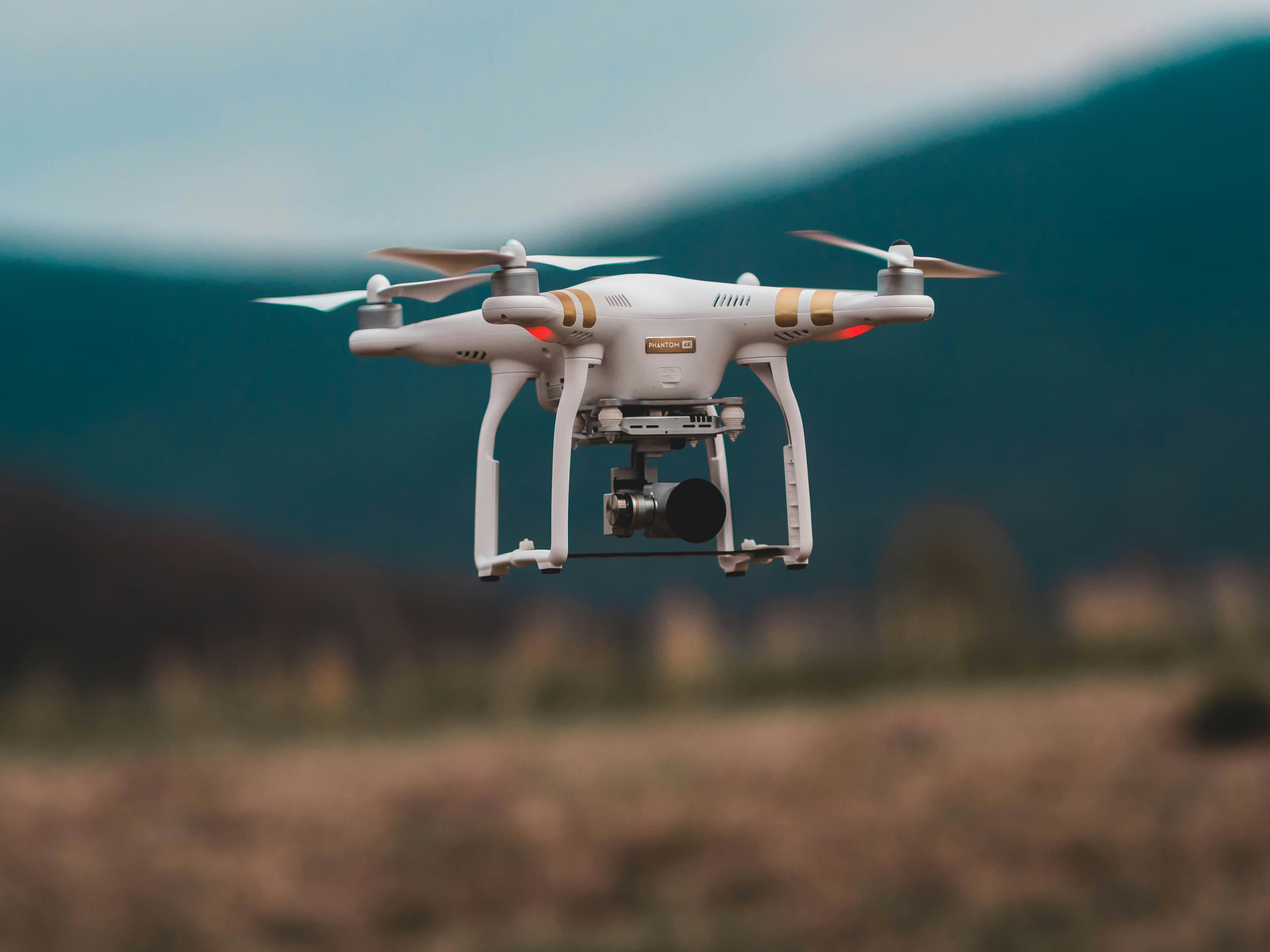
By the end of 2026, drone technology has transcended simple aerial observation, emerging as an autonomous and interactive platform for physical action. This shift is driven by the convergence of AI and advancements in heavy-lift cargo and Beyond Visual Line of Sight (BVLOS) capabilities. The Understanding section of this report explores how drones have become ubiquitous in humanitarian aid and rapid disaster assessment, and how they serve as tangible instruments of beneficence. The Applying section demonstrates that drones are uniquely positioned to solve critical problems in last-mile aid delivery and environmental stewardship. For ministries, the path forward requires strategic partnership with drone logistics companies, the prioritization of biblical and ethical paradigms to guard against the risk of surveillance and privacy violations, and a commitment to integrating drone data analysis into vocational training programs. The technology offers a powerful and visible demonstration of God's love in action, but its use must be guided by the highest standards of truth and integrity.

Blockchain Trend
By early 2026, blockchain has matured into a foundational General Purpose Technology (GPT), moving beyond cryptocurrency speculation to the core of institutional finance and enterprise systems. The Understanding section explores this critical shift, noting that the technology's core feature, the immutable ledger, presents a theological parallel to God's unchanging nature and commitment to truth, creating a unique opportunity for redemptive work. The Applying section details how the technology can be used to dramatically enhance transparency and accountability in ministry, particularly through Real-World Asset (RWA) tokenization to enable community stewardship models and the use of Decentralized Autonomous Organizations (DAOs) for transparent governance. However, the technology requires rigorous ethical scrutiny to counteract the risks of financial speculation, plutocratic control in DAOs, and the co-option of decentralization by centralized institutional systems. We are called to actively discern and support open-source projects that align with a Kingdom vision of empowering the marginalized and fostering genuine community governance.